
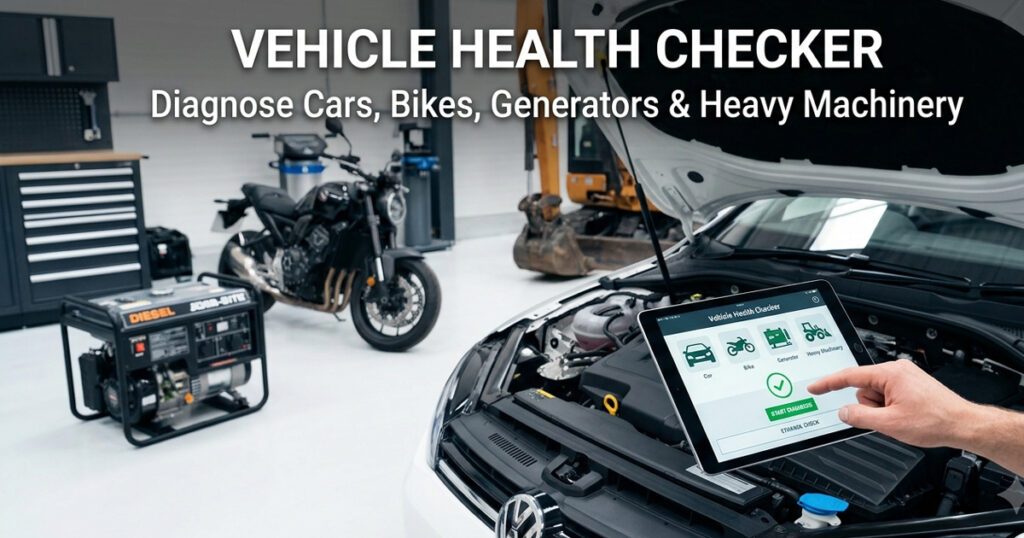
Vehicle Health Checker is designed to monitor a car, a bike, a job-site generator, or heavy construction machinery conditions. It asks a few questions about your fuel quality, ethanol blend percentage, an overdue fuel filter, carbon deposit buildup, or a genuine mechanical fault masquerading in your machine.
Works for cars, bikes, generators, and heavy machinery. Enter your equipment’s fuel and maintenance details below to get a health assessment — not a substitute for a physical inspection.
1. Equipment Profile
2. Usage & Maintenance History
3. Symptoms (select all that apply)
Assessment Results
Built for Any Fuel-Powered Equipment
This free online tool isn’t limited to cars. It applies fuel and maintenance patterns to motorbikes, generators, and diesel excavators, addressing cold-start issues, mileage drop-offs, ethanol compatibility, injector deposit buildup, fuel filter condition, and more.
Why Ethanol Blend Matters More Than Most Owners Realize
As global markets like India shift toward higher ethanol blends—from E10 to E20, with E30 and E85 relevant for flex-fuel vehicles—most common issues vehicle owners face stem from older machines not being designed for blended fuels. Ethanol is chemically more aggressive toward certain rubber seals, gaskets, and older fuel system equipment than pure petrol or diesel. While an engine rated for E10 running on E20 or a higher blend won’t guaranteed fail immediately, it carries a meaningfully higher risk of seal degradation over time. This is why the Vehicle Health Checker tool asks whether your machine’s engine is flex-fuel rated before flagging anything.
How This Vehicle Health Checker Tool Reaches Its Assessment
This online machine health checker tool is designed to diagnose problems rather than guess them. If your engine is running on a higher ethanol blend without confirmed compatibility, the tool flags this, as it represents a genuine risk factor on its own. If you report a rough idle or reduced mileage on a petrol or diesel engine without recent injector cleaning, it considers the classic profile of carbon deposit buildup. The tool provides options across diesel, petrol, and CNG engines to accurately explain your vehicle’s condition.
What This Vehicle Health Checker Cannot Do
It is important to understand what this tool cannot do: perform a physical inspection of your equipment, read a diagnostic trouble code (DTC), or replace a technician’s hands-on assessment. It works through pattern identification—similar to how an experienced technician would narrow down a problem based on symptoms and descriptions. It cannot distinguish between, for instance, a failing fuel injector and a wiring fault that produces identical symptoms.
When to Use This Vehicle Health Checker Calculator
This online tool is designed for first-pass triage—before adding fuel additives, scheduling maintenance, or visiting a service center. It is equally useful for routine equipment checks even when no symptoms are present, as it proactively flags overdue service intervals and ethanol compatibility risks.
Frequently Asked Questions
Find answers regarding the Vehicle Health Checker tool and fuel compatibility.