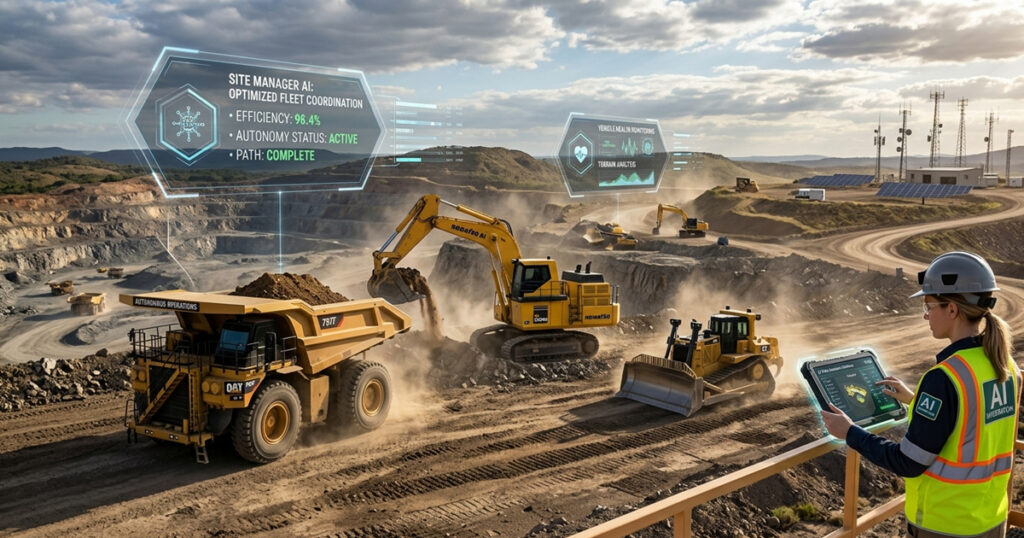
In 2026, as AI is growing day by day, industrial job sites are also switching to automation by edge computing and real-world machinery. As global infrastructure demand grows rapidly, the industry is transitioning toward Level 4 autonomous machinery at an accelerating pace. Also, most complex tasks are completed without a human in the cab, and it moved from a prototype dream to a $17 billion reality.
Major Level 4 Autonomy vs. Remote Operation
Understanding the depth of automation is beneficial for modern site managers. While 2024 was the year of remote control, 2026 is the year of true autonomy.
| Feature / Metric | Remote Operation (2024 Std) | Level 4 Autonomy (2026 Std) |
|---|---|---|
| Operational Logic | Human-in-the-loop (Real-time control) | AI-on-Edge (Self-executing tasks) |
| Connectivity Needs | Ultra-low latency (5G/Starlink Required) | Intermittent sync (Operates offline) |
| Safety Protocols | Operator-dependent reaction time | Instant 360° LiDAR/Radar emergency stop |
| Fuel/Cycle Efficiency | Variable (Based on operator skill) | Optimized (Mathematical path planning) |
| Main Use Case | Hazardous waste, High-risk zones | Mining, Massive earthmoving, Piling |
The Digital Twins: The “Brain” of the 2026 Jobsite
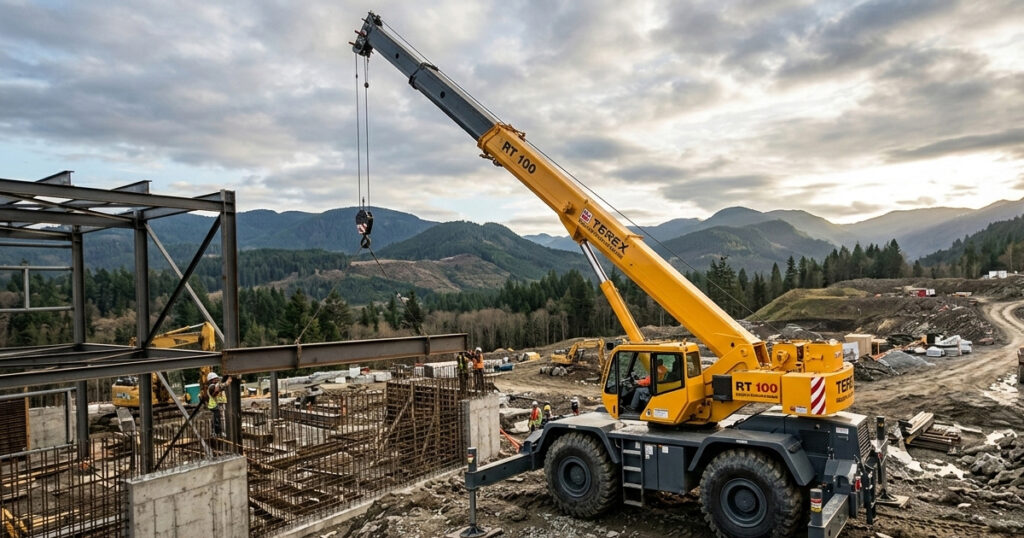
A Digital Twin is a virtual 1:1 replica of your physical machinery and site topography. By using LiDAR-equipped drones and IoT sensors, the AI system develops a live simulation in waste-to-energy plants, and the system detects microscopic metal shavings in the hydraulic system to avoid the breakdown. Also, autonomous rough terrain cranes instantly freeze if a human worker comes in their digital shadow.
The Impact of Generative AI on Mechanical Design
Nowadays, engineers are embedding generative design to develop machine parts. By using smart parameters in an LLM-based design tool, the AI “evolves” a part that is 30% lighter but 50% stronger than regular steel castings and improves the industry’s workflow. This is specifically transformative for the boom sections of pilling rigs and mobile cranes, where weight-to-strength ratios are everything.
Frequently Asked Question
What is the main difference between Level 3 and Level 4 autonomy in construction?
Level 3 requires a human operator to remain available to take over control if the system requests it. In contrast, Level 4 autonomy can handle all safety-critical functions independently within a defined geofence, allowing the machine to operate safely even if the data connection is temporarily lost.
How does AI improve fuel efficiency in heavy-duty machinery?
AI algorithms optimize path planning to significantly reduce unnecessary idling. By calculating and executing the shortest, most efficient movements during loading and unloading, the system minimizes fuel consumption and engine wear.
What is a digital twin in construction equipment?
A digital twin is a virtual, real-time replica of a physical machine (such as waste-to-energy cranes) built from sensor and LiDAR data. It enables engineers to monitor wear, simulate operations, and detect potential issues proactively.
Do operators still need training if machinery becomes autonomous?
Yes. While Level 4 autonomy handles routine execution within a designated zone, operators and site engineers still require training to oversee the system and manage higher-level site logistics.
Is Level 4 autonomous machinery available for rental or only purchase?
Availability varies by manufacturer and region. However, larger equipment rental fleets in mining and major construction operations are increasingly offering Level 4 or remote-assist units for temporary deployment.